.png)
Best Practices for Online Interviews: A Researcher's Guide to Getting It Right

Online IDIs with webcams are now the most commonly used qualitative research method, with over one-third (34%) of researchers worldwide using them regularly (Statista, via Backlinko). Yet the shift to remote interviewing hasn't eliminated the conditions for great research; it's simply relocated them.
And the case for online over in-person is now well-established: research has consistently found that remote qualitative interviews generate comparable ideas, themes, and data richness to their in-person counterparts. Some studies go further, finding that participants tend to disclose more sensitive information in remote settings; arguably a net gain for qual research.
Whether you're running your first virtual IDI or you've moderated hundreds of remote sessions, having a systematic approach to every phase of the interview (before, during, after) is what separates forgettable fieldwork from genuinely actionable insight.
The “Before”: Setting the Stage for Success
The quality of an online interview is largely determined before anyone presses "join." Preparation at this stage isn't just logistical housekeeping; it's a direct investment in the depth of what you'll get from your respondents.
- Run a proper tech check.
One of the most underestimated sources of session failure is a participant encountering technical friction for the first time mid-interview. Research consistently flags connectivity and equipment issues as among the primary risks of online qualitative work (Anthony et al., 2025; Roberts et al., 2025).
Sending a tech check link in advance (where respondents can confirm their audio, video, and connection are working)eliminates avoidable disruption and signals professionalism from the outset. Platforms like Bello (shameless plug!) allow you to set up tech checks as part of the pre-meeting workflow, so nothing is left to chance when your session goes live.
- Send reminders and agreements proactively.
Participant no-shows are costly. A structured reminder cadence, combined with digital consent agreements sent in advance, reduces attrition and ensures participants arrive prepared and informed. This is especially important in sensitive research contexts, where HIPAA, GDPR, or CCPA compliance isn't optional; it's a fundamental obligation to respondents.
- Build the right room.
Before your session starts, configure your observer and moderator setup thoughtfully. Who needs to be present? Does your client need a separate back-room observer view? Will you need a translator? The best platforms let you add moderators, observers, and translators before the session begins — so roles are clear, access is controlled, and your research team operates as a cohesive unit rather than a group improvising under pressure.
“During the Interview”: Creating effective conditions
The paradox of great qualitative research is this: The more comfortable respondents feel, the more uncomfortable truths they're willing to share.
Your job as a moderator is to make the digital environment feel as natural and conversational as possible. Here are a few ways you can accomplish this;
- Open with genuine warmth.
Begin every session with a few minutes of low-stakes conversation before moving to your research topics. Remote settings can feel clinical, and a brief, genuine exchange goes a long way in building the rapport that produces honest, exploratory answers.
- Use bookmarking to capture moments as they happen.
One of the distinct advantages of modern online research platforms is the ability to flag significant moments in real time. When a respondent articulates something particularly striking, for example, an unexpected emotion, a revealing contradiction, a phrase that perfectly captures a consumer attitude, mark it immediately. Bello's bookmarking feature lets moderators tag these moments during the session itself, so post-analysis begins before the recording ends.
- Transcription and closed captions as live safety nets.
Activate transcription and closed captions from the start of your session. Beyond accessibility, they serve as a real-time quality check, helping you catch misheard terms, track the conversational arc, and ensure nothing slips through in the inevitable moments when you're too focused on moderation to note-take simultaneously.
The “After”: Turning the conversation into insights
The session ends, but the research does not. What happens in the hours immediately following an interview shapes how effectively you can transform rich qualitative data into the kind of strategic clarity your clients are paying for.
- Review your replay while the session is fresh.
Post-session video review is most valuable when done promptly, ideally within 24 hours of the interview. Bello makes replays and transcripts available within minutes of session completion, allowing moderators and analysts to revisit bookmarked moments, verify quotes, and begin identifying patterns before memory and context fade.
- Use transcripts as working documents, not archival ones.
Transcripts are often treated as static records, consulted only when a specific quote needs verification. The better approach is to engage with them actively, annotating, coding, and clustering themes as you read. When transcripts are accessible and downloadable immediately after a session, this analytical habit becomes sustainable at scale.
- Debrief with observers while impressions are live.
One of the most underutilized moments in qualitative research is the immediate post-session debrief. Gather your back-room team while the conversation is still vivid. What surprised them? Where did respondent behavior diverge from the hypothesis? What probes opened the richest territory?
- Maintain an attendance and participant record.
Attendance reports sound administrative, but they matter. Knowing who attended, for how long, and under what technical conditions is essential for quality control, particularly on large, multi-session projects where participant consistency affects the integrity of your findings.
In conclusion…
Underlying all of these practices is a foundational principle that tends to get obscured by feature lists and pricing tiers: the technology you use to conduct qualitative interviews should feel invisible in the best possible sense.
It should reduce friction, not introduce it. It should handle logistics so researchers can focus on the humans in front of them.
Great online interviews don't happen by accident. They're the product of disciplined preparation, intentional facilitation, and structured reflection, supported by the right infrastructure at every stage. Get those elements right, and the distance between moderator and respondent becomes largely irrelevant.
|
How can Bello help? Bello is a purpose-built platform for qualitative research that supports every phase of the interview process:
|
Explore Bello's features or schedule a demo
Featured posts
Author

Shamsu Bhaidani
Founder of Bello, where we're building a home for qualitative conversations. I care deeply about transparency, accessibility, thoughtful research design, and making live and asynchronous studies easier for teams and participants alike.
Related Content
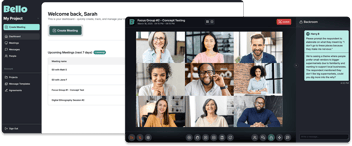
Introducing Bello: Where Beautiful Conversations Begin
The best research happens when technology gets out of the way. That simple truth drives Bello, a...
Read more
Building Screeners That Actually Work
The best qualitative research begins long before the first conversation starts.
Read more